
临时天堂
卫龙不再只靠辣条:为什么越来越多品牌都在寻找“第二曲线”?_我的网站

一 | 近日,卫龙美味发布港股上市公司2026年半年报。

二 | 报告显示,上半年公司实现营业收入37.15亿元人民币,同比增长6.7%;净利润7.66亿元人民币,同比增长4.0%。

三 | 分品类来看,调味面制品(辣条等)收入11.81亿元人民币,同比下降9.8%;蔬菜制品(魔芋爽等)收入24.4亿元人民币,同比增长15.8%。
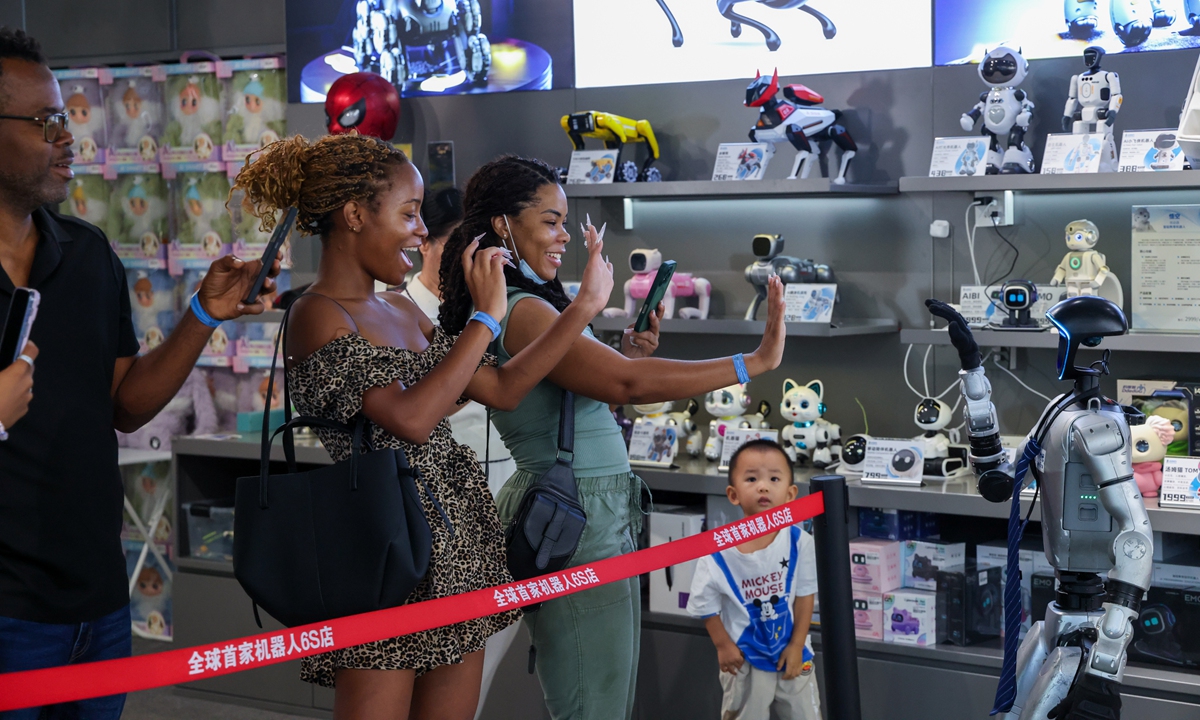
Industry data showed that Chinese vendors accounted for more than 97 percent of global humanoid robot shipments in the first half of 2026. Additionally, Chinese robotics firm Unitree Robotics began its share subscription process for its listing on Shanghai's stock market, becoming the first humanoid robot A-share stock.
The global humanoid robot shipments reached approximately 19,100 units in the first half of the year, surging 272 percent year-on-year. The market saw a leadership shift, with Chinese robotic company AGIBOT overtaking Unitree to become the world's largest humanoid robot vendor. China also represented more than 85 percent of global demand, according to the latest research from Smart Analytics Global (SAG).
As the former global leader in 2025 with annual shipments of 5,500 units, Unitree Robotics set its IPO offering price at 150.8 yuan ($22.35) per share on Monday. The initial public offering (IPO) is expected to raise 6.1 billion yuan, meaning an estimated market capitalization of around 61 billion yuan, according to media reports. The final online subscription winning rate will be 0.0181 percent, Unitree said on Monday.
The breakthroughs in humanoid robotics represent the latest landmark of China's booming "new new three" industries, which are emerging as core pillars driving the country's high-end manufacturing upgrade, export expansion and future economic growth.
Driving forces
The rapid and comprehensive rise of China's robotic sector stems not merely from policy incentives, but from integrated advantages in complete manufacturing chains, forward-looking institutional arrangements and massive real-world application scenarios, industry analysts noted.
"The answer lies not in mere policy slogans, but in the synergies rooted in its manufacturing base, early institutional frameworks, and vast application scenarios. These factors have driven the 'new new three' industries onto the global stage," Zhang Xiaorong, director of the Beijing-based Cutting-Edge Technology Research Institute, told the Global Times on Monday.
A robust supply chain has been decisive. The localization rates across China's robot industry chain have risen markedly in 2026, with core components shifting to domestic control, CCTV News reported, citing an executive of a Shenzhen-based robot company, who said that more than 90 percent of key parts for its humanoid robots are sourced domestically.
"No other market is better suited for the robotic industry than China," the executive said.
Institutional analysis noted that the domestic production rate of Unitree Robotics' supply chain reaches 90 percent, while all core components are fully self-developed.
Zhang also said the large domestic market serves as a unique testing ground.
"Strong robot exports reflect advances in complete machine design, system integration, scenario algorithms, rapid delivery, and cost control, alongside continued localization of reducers, servo systems, and sensors. Large-scale applications in new energy vehicles, electronics manufacturing, and warehousing provide frequent iteration and engineering validation," said Zhang.
Institutional foresight also played a role. Robot manufacturing was first listed as an independent industry in the national standard for industry classification in October 2017, with sub-categories including "industrial robot manufacturing" and "special operation robot manufacturing" following in 2023.
Analysts noted that this early classification facilitated later policy support, capital-market positioning, and statistical monitoring.
In June 2026, several ministries launched a special program for real-scenario training of humanoid robots and embodied AI.
Customs adjustments, effective from January 1, added specific tariff codes for intelligent biomimetic and cleaning robots, simplifying export clearance.
Insurance coverage also followed. In June, China Export & Credit Insurance Corp issued an insurance policy for AGIBOT's embodied robot export project, providing overseas risk coverage.
Supported by complete industrial chains, rich scenarios and systematic policy guarantees, China's robotic sector has built an unshakable global edge, experts noted.
A faster pace
Official data showed that China has more than 400 complete humanoid robot models - over half the global total - while quadruped robots account for nearly 70 percent of worldwide sales.
"China may produce more than 100,000 humanoid robots this year, with even higher growth expected in the following years, pointing to long-term opportunities in a sector with deep potential," Yang Delong, chief economist at Shenzhen-based First Seafront Fund, told the Global Times on Monday.
China's robot export momentum has also reached new heights. After becoming a net exporter of industrial robots for the first time in 2025, China's industrial robot exports reached 6.29 billion yuan in the first half of 2026, reaching 141 countries and regions, official statistics show. Surgical robot exports rose 3.3 times year-on-year. Overall robot exports grew 359 percent.
AGIBOT, the champion of humanoid robot shipment so far this year, illustrated the rapid scaling: Its 15,000th embodied AI robot rolled off the line on June 28, less than three months after the 10,000-unit milestone.
All units are being delivered to domestic and overseas customers for use in 3C (computer, communication and consumer electronics) manufacturing, warehousing and logistics, and commercial services, AGIBOT told the Global Times.
Jiang Qingsong, company partner and co-president of AGIBOT, told the Global Times on Monday that the company aims for overseas sales to exceed 30 percent of its total in 2026 and potentially surpass 50 percent later.
Strong progress in robotics is closely backed by China's booming artificial intelligence sector.
Hugging Face's latest report found that over the past year, "Chinese models quickly accounted for the plurality or 41 percent of downloads," surpassing the US for the first time.
On the OpenRouter platform, Chinese AI models' token usage reached 34.25 trillion in the week ended Sunday, meaning roughly half of global share, while remaining ahead of US models for the 15th consecutive week.
Yang noted that China's AI progress is supporting growth across six frontier sectors - robotics, semiconductors, computing power and algorithms, commercial spaceflight, solid-state batteries, and biomedicine.
In terms of innovative drugs, by the end of 2025, China had 4,751 innovative drugs in development - 33.7 percent of the world total - making it the global leader in the pipeline.
Outbound licensing deals totaled about $110 billion in the first half of 2026 - already 80 percent of the full-year 2025 figure - with Chinese firms occupying eight of the global top 10 pharma deals. During the same period, 38 innovative drugs were approved, according to data from National Medical Products Administration.
Benefit the world
The vigorous rise of the "new new three" industries marks China's third major upgrade in export structure, following the traditional "old three" (garments, furniture and home appliances) and the "new three" (new energy vehicles, lithium-ion batteries and photovoltaics). Each industrial iteration features higher technological content, stronger innovation capacity and deeper integration into the global economy.
China's breakthroughs in robotics, AI and innovative medicine deliver tangible benefits to global industries and consumers.
For example, AGIBOT's European representative Sandy Liu told the Global Times that universities and large manufacturers in automotive and warehousing are the company's main users in Europe, driven by rising labor costs and the need for new solutions.
Chinese open-source AI models have transformed high-end artificial intelligence technology from exclusive luxury resources into affordable, accessible digital infrastructure, benefiting global startups and developing economies. Innovative drug outbound licensing also accelerates global research collaboration and improves global patient access to cutting-edge treatments, analysts pointed out.
China's role in global trade is shifting from single manufacturing links toward a deeper embedding in technology, systems, and standards. What remains constant is the innovation that injects valuable certainty into the world economy and supports more inclusive globalization, analysts noted.
。

四 | 从数据上看,卫龙确实在经历产业结构的变化。辣条这个曾经撑起品牌大半江山的品类,正在被魔芋制品超越。

五 | 但这并非卫龙独有的现象。跳出卫龙看整个消费行业,类似的“第二曲线竞赛”正在多个赛道同时上演。 魔芋的消费场景正在被重新定义 据新华网发布的《我国魔芋食品产业发展的观察与研究》报告,2024年我国魔芋产业总产值已达320亿元,预计2030年将突破450亿元。其中魔芋零食作为新兴细分品类,从2014年几乎为零的市场,到2025年突破300亿元规模。 魔芋零食的增长并非偶然。《中国食物与营养发展纲要(2025—2030年)》明确提出加大魔芋等富含膳食纤维的特色食物供给。低热量、高纤维的天然优势,让魔芋完美契合了消费升级的趋势。艺恩2025年10月发布的《零食行业消费趋势洞察》显示,健康零食已成为核心增长引擎,2024年市场规模达8200亿元,2025年预计突破9500亿元,增速是整体零食市场的1.9倍。

六 | 与此同时,中国零食行业正经历“从数量扩张到素质提高”“从能量供给到复合需求”的双重转变。传统以膨化、糖果为主的零食增速放缓,市场陷入存量博弈;而以辣味、健康化为代表的新兴赛道正迸发出远超行业的活力。 魔芋食品的消费已从“单一场景、小众人群”转向“多元场景、广泛人群”,呈现“健康化、年轻化、便捷化”特征。在火锅、麻辣烫等传统餐饮渠道之外,办公室零食、下午茶、代餐、运动补给等新兴场景正在崛起。 卫龙的变化:从“辣条”到“辣味休闲零食” 在这样的产业背景下,再看卫龙的变化,逻辑就清晰了。

七 | 卫龙以辣条建立了鲜明的品牌认知——这是它无法也不应抛弃的资产。调味面制品仍是其重要业务板块,2026年上半年11.8亿元的收入放在任何一个休闲食品品类里都不是小数目。据券商监测数据,卫龙在辣条品类的市场份额约达28%。 但卫龙同时在做另一件事:把辣条积累的品牌势能、渠道能力和供应链经验,平移到了魔芋这个新品类上。2014年,卫龙推出魔芋爽,将魔芋从火锅配菜变成开袋即食零食的品牌。十年后,以魔芋爽为代表的菜制品年销售额超30亿元,卫龙以超六成的市场占有率稳居魔芋零食赛道前列。 从辣条到魔芋爽,卫龙没有离开“辣味”这个最核心的消费者认知,而是在这一基础上不断扩展品类。辣味零食是一个比辣条大得多的赛道——它包含辣条,但不局限于辣条。卫龙的成长,本质上是从“辣条”这个小细分走向了“辣味休闲零食”这个大细分。 《报告》将卫龙魔芋爽称为“观察中国零食产业如何顺应消费趋势、实现价值升级的行业样本”。

八 | 这个描述同样适用于卫龙的整个产品矩阵——从辣条到魔芋爽,卫龙用二十年的时间,完成了从单一爆品到多品类布局的进化。

九 |
Current article:http://dntj5w.chuaiguonengdonggai.buzz/news/20260826_2881292.html
Published on:17:19:56
勇者行动_Random reading
- 08-23三部门调拨2万件中央救灾物资支持广西做好台风“紫檀”救灾救助工作
- 08-26地球的磁极正从加拿大快速地移动到西伯利亚,科学家们也很困惑。
- 08-20Shah Rukh Khan Pens Emotional Message As Andre Russell Retires From IPL
- 08-22政声直达丨河北普通高校招生录取工作顺利结束
- 08-207款中/大型SUV大横评第二波:谁能更优雅地进入第三排?
- 08-25盈新发展:股东湖南华建拟减持0.85%公司股份
- 08-20前NASA宇航员、阿波罗任务指挥官詹姆斯·麦克迪维特逝世 享年93岁
- 08-26Karan Kundrra के कारण Anusha Dandekar ने झेली थी लोगों की नफरत, साधा तेजस्वी प्रकाश के ब्वॉयफ्रेंड पर निशाना?
- 08-232025款欧拉好猫/好猫GT木兰版将于6月27日上市 预售8.98万元起
- 08-24民宅内查获42处大麻种植点 警方提醒房东:注意检查你的房产

男女纠察队_Active users
- 让福彩公益温度浸润追梦少年心田——河北省第25届“福彩献真情 爱心助学子”活动报名进行中
- Xi extends condolences to Indonesian president over strong earthquake
- 日本排放核污染水已三年,22轮累计排放超17万吨
- Monoprice推出Monolith MTM百瓦桌面蓝牙aptX HD有源扬声器
- 新款特斯拉Model Y高性能版无伪装谍照 预计0-100/h加速3.2秒
- 维梧神秘码新机器“飞沫”曝光:全裸?
- 台湾加权股价指数收涨0.91%
- 8月24日晚间沪深上市公司重大事项公告最新快递
- 【透视社·头条】大搞权钱交易、将政协委员资格等私相授受,正部级“老虎”董云虎被提起公诉
- Qixi Festival draws surge of couples for marriage registration(1/3)
- China's KSG beats fellow team AG.AL to win Honor of Kings World Cup
- 2026年冬奥会设项调整 中国冰雪冬奥新周期迎来新挑战
- Scholar: Pelosi's Taiwan Visit to Deal Heavy Blow to US-China Ties, Inflict Damage on Taipei
- 总有没去过的!新加坡这12个新公园必去!遍布全岛,徒步骑行友好
- 铠侠发布写不死的数据中心TLC SSD 最高容量7.7TB
- 《斗仙》特色新服「浮生若梦」今日正式开启!
- 售33.98万起 腾势D9第25万台量产车正式下线
- 冲刺四季度|望花区:切实把政策红利转化为发展动力
胡雪岩_Hottest this week
- 08-22如何挑选迪士尼新生儿玩具正规分销商资质介绍
- 08-23黄山栾开花 银杏果变黄 一起寻找秋天的信号吧
- 08-212026-27西部战力榜:马刺第一,雷霆64胜却第二,湖人失去詹姆斯仍第四?
- 08-22हर घंटे में देश में हो रहे 55 सड़क हादसे, 20 लोग गंवा रहे जान; इस राज्य में हो रही सबसे ज्यादा एक्सीडेंट में मौतें
- 08-26欧洲联赛主席:改革FIFA这套全球管理体系远比换掉因凡蒂诺更关键
- 08-25施罗德:2023世界杯夺冠之后 我的生涯再无遗憾
- 08-26您好,顺风1月下旬开始试运行:上海、杭州、广州、成都等6个城市。
- 08-26Black medic wounded on D-Day to be honored for treating dozens of troops
- 临时天堂 copyright
- Some of the content comes from the Internet. If you have any offence, please raise it.