
刀马旦
「ジムニーノマド」が「受注再開」&「一部改良」!「変更点」や「注文方法」、気になる「納期」は?_我的网站

一 | 「抽選方式での注文再開が決定」 2025年1月30日に発表されるや否や、5万台もの注文が殺到したスズキ ジムニーノマド(以下、ノマド)。

二 |
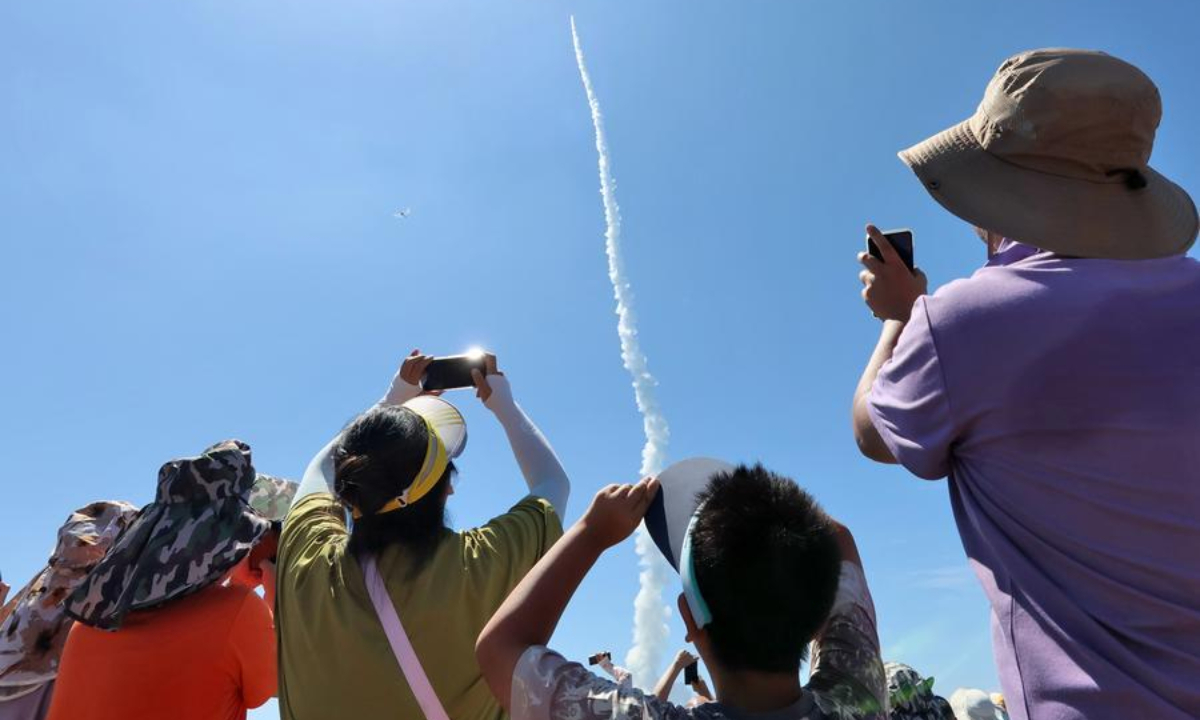
A burst of flame lit the morning sky over waters off Haiyang in east China's Shandong Province on Wednesday as a Smart Dragon-3 (SD-3) carrier rocket lifted off, drawing cheers from viewing sites along the coast.
Among the spectators were international students studying aerospace subjects in China. Aithana Perez, a Venezuelan aeronautical engineer studying space project management at Hangzhou Innovation Institute of Beihang University, said she and her classmates were excited because their studies involved spacecraft launch, design and operation.
For Marwane Oufrid, a 23-year-old Moroccan student in the same institute specializing in microsatellite technology, it was the first time he had watched a rocket launch in person.
The rocket blasted off at 10:38 a.m. (Beijing Time), delivering the Oriental Smart Eye hyperspectral satellites 01 and 02 into planned orbit.
In their respective cooperation projects with Indonesia and Uzbekistan, Satellite 01 is also known as Lampung-1 and Satellite 02 as Samarkand-2028.
Once in orbit, the satellites turned their attention back toward Earth. Lampung-1 is expected to monitor crop growth and disaster risks in Indonesia, while Samarkand-2028 is designed to support cotton cultivation and other land-monitoring applications in Uzbekistan.
Ordinary optical cameras mainly record the shape and color of objects. Hyperspectral imagers record a detailed spectrum for each image pixel, creating "spectral fingerprints" that can help determine the condition and composition of vegetation, water, soil and minerals.
These spectral "eyes" are paired with onboard AI computing modules capable of delivering up to 400 trillion operations per second. Instead of sending every raw image to the ground, the satellites can identify features, detect anomalies and extract useful information in orbit, potentially shortening delivery time from days to minutes.
Song Bingchen, co-founder of the Star.ai Spatio-temporal Intelligence Technology Co., Ltd., whose subsidiary STAR.VISION developed the satellites, compared the system to moving an AI inference platform from the ground into space.
"It changes the traditional model from transmitting images to transmitting results," Song said.
"Our satellite constellations are open to the world," Song noted, adding that the company welcomes international partners to jointly invest in, build and use the satellite networks.
In Indonesia, Lampung-1's planned applications are centered in Lampung Province on the island of Sumatra. Agriculture, forestry and fisheries accounted for 28.38 percent of the provincial economy in the third quarter of 2025. The satellite will also support marine resource management, environmental monitoring and disaster response.
Rahmat Mirzani Djausal, governor of Indonesia's Lampung Province, described the successful launch as a "historic moment" for the province.
"Cooperation with China on this satellite project is of historic and strategic significance," he said. "It marks the beginning of Lampung's transformation into a technologically advanced province."
The governor commended China's openness in sharing space technology and its commitment to long-term cooperation.
"China understands that any problems we face on one side of the world will ultimately impact the other side. Therefore, it is essential to empower regions that are left behind to make the world ultimately a better place," he said.
This cooperation also extends to people. Lampung is preparing to send over 100 young professionals to China for training in remote sensing and satellite communications, with the goal of building local capacity in satellite operation, data processing and spatial analysis.
In Uzbekistan, the applications center on cotton, grain and vegetation monitoring. Samarkand-2028 is designed to follow cotton cultivation from sowing to harvesting, while Uzbekcosmos has said hyperspectral data will also be used to produce national cotton and wheat maps.
Mukhiddin Ibragimov, deputy director of the Uzbekcosmos Agency, described the project as one of the largest international space projects in Uzbekistan's history and a milestone in its national space program.
He called the launch "a great occasion," saying it was the first time Uzbekistan had participated in an international space mission of such scale.
Ibragimov said Uzbekistan sent a technical team to China early in the project and formed a working group with Chinese specialists to develop an AI model for onboard data analysis. This model focuses on crop classification, including cotton verification, grain identification and vegetation monitoring.
The resulting data will support agriculture, water resource management, environmental protection and emergency monitoring, among other applications, he revealed.
Ibragimov said no single country can handle all space-related tasks alone.
"We believe that partnership brings value. We see that China is doing the same thing," he said, adding that Uzbekistan is exploring further satellite cooperation with China.
The projects offer a commercial example of the approach set out in China's 2021 space white paper, which called for international cooperation based on equality, mutual benefit, peaceful utilization and inclusive development.
Back in Haiyang, Oufrid said projects of this kind could give more countries an opportunity to participate in the space sector. He expressed the hope to see such cooperation happen more often and "maybe someday with Morocco as well."
。

三 | スズキも「これは売れる!」という自信はあったと思いますが、ここまでの反響は想定していなかったのでしょう。なんとわずか4日間で受注停止という事態に陥りました。【オプションに追加されたバックアイカメラ付きディスプレイオーディオ・スズキコネクト対応通信機】 オーダーができなかった人は「生産台数を増やして早く受注を再開してくれ!」と思っていたはず。しかしクルマの生産計画はそう簡単に変更できるものではありません。しかもノマドはインドのグルガオン工場で生産され、日本をはじめ中東やアフリカ、中南米などに輸出されています。

四 | そのため、日本の都合だけで各国への割り当てを変えるのが難しいという事情もあります。それでもスズキは当初月販1200台だった日本への割り当てを同年7月から3300台に増産。SNSを見ていると同年9月頃から納車が急ピッチで進んでいることが伝わってきました。そして2025年10月27日、スズキは2026年1月30日からノマドの受注を再開すると発表。

五 | 実に1年ぶりの受注再開です。

六 | デビュー時は購入希望車が殺到して混乱が生じました(筆者がたまたま発表翌日にスズキディーラーに行ったら、平日の午前中なのに商談待ちの列ができていたほどです)。でも今回は1月30日から2月28日までの1ヵ月間、全国のスズキ販売店の店頭で申し込み(電話やメールは不可)をし、締切後に抽選で納車の順番を決める方法が取られます。もちろん3月1日以降も受注停止にはならず、通常通り注文ができます。ただ、2月28日までに相当数の注文が入ることは予想されるので、3月以降に注文する場合は1年以上(下手すれば2年近く?)の納車待ちは覚悟したほうがいいでしょう。そして抽選に申し込むことを考えている人も、「まだ時間があるから」とのんびりせず、早めに家族に購入の相談をしてスズキ販売店に行くことをおすすめします。うっかり2月末までに注文するのを忘れると、取り返しがつかないことになります。
Current article:http://dntj5w.chuaiguonengdonggai.buzz/news/20260826_376735.html
Published on:13:07:37
栏目相关
- 长隆携手智元,在横琴打造全球首个具身智能主题乐园
- 提前2个多月申请退票 国航近5000元返程机票只退140元
- 万物皆可租,这届年轻人医疗设备也靠租
- 新疆维吾尔自治区伊犁哈萨克自治州政协原党组成员张新成被查
- 罗斯手握巨额合同 购置宾利都要和兄长商量
- 体彩赋能咏春大赛 非遗绽放国际光彩
- 【透视社·履新动态】贵州省委常委、常务副省长吴强,已兼任省委金融办主任、省委金融工委书记
- 薪资专家解析哈登续约:骑士需先清理薪资空间
- 黄山栾开花 银杏果变黄 一起寻找秋天的信号吧
- 电竞世俱杯70%收入靠赞助,距离足球世界杯有多远?
- Holy Eid- miladunnabi observed in Bangladesh with religious fervor
- Chinese president, Jordan's king attend signing ceremony of cooperation documents
热门排行
- 医药板块震荡走高 冀衡医药等多股涨停
- 西媒:博索纳罗称“若输掉大选将退出政坛”_英媒:厄瓜多尔或被逐出世界杯_卢拉
- 潘非琼入选“致敬英雄”人物
- 伊朗官员:任何参与对伊经济限制的国家都被视为敌人
- U20女足世界杯在哥斯达黎加开赛
- 2024年福布斯全球富豪榜新鲜出炉,恭喜这些新西兰人!
- Nato to boost Ukraine's missile defence
- 男子骚扰女孩、殴打女孩家长 河南新郑市警方:已被采取刑事强制措施
- 姗姗来迟的越南南北高铁
- 拼多多维护商家以次充好不当得利,永远让机器人回复我,我不上人工客服
- 話題のYouTuber、下着姿で美ボディー披露 ブランドが最新ビジュアル公開
- 一线记者讲故事 | 明明是赔本买卖,这些小店为何甘愿坚持?